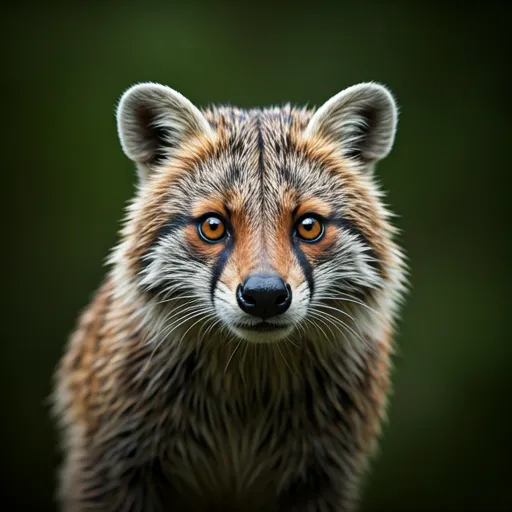
When we think about intelligence, humans often place themselves at the pinnacle of cognitive ability. However, the animal kingdom is filled with remarkable creatures that display extraordinary problem-solving skills, emotional depth, and complex social behaviors that challenge our understanding of what it means to be "smart."
Intelligence in animals manifests in various ways: tool use, self-awareness, communication, problem-solving, memory, and social learning. Some animals excel in one area while others demonstrate a broader range of cognitive abilities.
"The question is not, Can they reason? nor, Can they talk? but, Can they suffer?" - Jeremy Bentham. Today, science has shown us that many animals can indeed reason, communicate, and demonstrate intelligence in ways we're only beginning to understand.
The 15 Smartest Animals on the Planet
Chimpanzees
Great ApesSharing approximately 98% of our DNA, chimpanzees are our closest living relatives and demonstrate remarkable cognitive abilities. They use tools, engage in complex social politics, show empathy, and can learn sign language with vocabularies of hundreds of words.
Bottlenose Dolphins
Marine MammalsDolphins possess one of the highest brain-to-body ratios in the animal kingdom. They demonstrate self-awareness (recognizing themselves in mirrors), use sophisticated echolocation, and communicate using a complex system of clicks and whistles unique to each individual.
Elephants
Largest Land MammalsElephants have the largest brain of any land animal and display behaviors associated with grief, learning, mimicry, art, play, humor, altruism, and tool use. They can recognize themselves in mirrors and remember locations and individuals for decades.
Crows & Ravens
CorvidsCorvids are considered the most intelligent birds on Earth. They can solve multi-step puzzles, use tools, plan for future events, and even understand water displacement. New Caledonian crows can craft tools from materials they've never encountered before.
Orangutans
Great ApesOrangutans are master tool users and demonstrate cultural transmission of knowledge. They build elaborate sleeping nests, use leaves as gloves and napkins, and have been observed using tools to extract insects and honey. They can also learn sign language.
African Grey Parrots
BirdsAfrican Grey Parrots don't just mimic human speech - they understand it. The famous parrot Alex could identify colors, shapes, and quantities up to six, and understood concepts like "same" and "different." They demonstrate reasoning abilities comparable to a 4-5 year old child.
Octopuses
CephalopodsWith two-thirds of their neurons located in their arms, octopuses have a distributed intelligence unlike any other creature. They can solve complex puzzles, open jars, use coconut shells as portable shelters, and even escape from "secure" aquarium tanks.
Pigs
Domestic AnimalsPigs are considered more intelligent than dogs and even some primates. They can play video games using joysticks, understand symbolic language, and demonstrate self-awareness. They have excellent long-term memories and can remember locations of food sources.
Bonobos
Great ApesBonobos, along with chimpanzees, are our closest relatives. They're known for their peaceful, matriarchal societies and remarkable emotional intelligence. Bonobos can communicate using lexigrams and understand spoken English to a significant degree.
Dogs
Domestic AnimalsDogs have evolved alongside humans for over 15,000 years, developing unique abilities to understand human emotions, gestures, and language. Some dogs can learn over 1,000 words and understand basic grammar. Their emotional intelligence is unmatched among domestic animals.
Rats
RodentsRats possess metacognition - they know what they know and don't know. They display empathy, freeing trapped companions even when offered chocolate as an alternative reward. They can be trained to detect landmines and tuberculosis with remarkable accuracy.
Pigeons
BirdsDespite their "bird-brained" reputation, pigeons can recognize all 26 letters of the alphabet, distinguish between photographs, and even detect cancer in medical images. They're one of only six species that can pass the mirror self-recognition test.
Gorillas
Great ApesGorillas can learn sign language (Koko the gorilla knew over 1,000 signs), use tools, and display complex emotions including grief and compassion. They live in sophisticated social groups with intricate hierarchies and relationships.
Squirrels
RodentsSquirrels have exceptional spatial memory, remembering the locations of thousands of buried nuts. They also engage in deceptive behavior, pretending to bury nuts when they know they're being watched, then hiding them elsewhere.
Honeybees
InsectsDespite having brains smaller than a sesame seed, honeybees demonstrate remarkable collective intelligence. They communicate through "waggle dances," can count up to four, understand the concept of zero, and make democratic decisions about new hive locations.
Conclusion
The intelligence displayed by these animals challenges our anthropocentric view of cognition. Each species has evolved unique cognitive abilities suited to their ecological niche, reminding us that intelligence is not a single trait but a diverse spectrum of capabilities.
Understanding animal intelligence not only deepens our appreciation for the natural world but also provides valuable insights into the evolution of cognition itself - including our own remarkable human minds.
As research continues to reveal the depths of animal intelligence, one thing becomes clear: we share this planet with beings far more cognitively complex than we ever imagined. Perhaps it's time we started treating them accordingly.

Emily is a science writer specializing in cognitive science and animal behavior. She holds a degree in Biology from Stanford University and has written for National Geographic, Scientific American, and Nature.